

In this collection · Sleep & Airway
EXOMIND® for Sleep & Mental Wellness
When the airway is handled and the mind still won’t settle.
EXOMIND® is non-invasive ExoTMS neuromodulation that may be incorporated into selected patients’ broader sleep and mental-wellness plan. When stress, anxiety, mental hyperarousal, or difficulty settling the nervous system may be contributing to poor sleep or repeated nighttime awakenings, EXOMIND may be considered as one part of a broader evaluation and treatment approach. It is not a cure for insomnia, and it does not treat obstructive sleep apnea.

The pattern
A busy mind is its own kind of sleep problem.
Some people describe lying down tired and finding the day starts over behind their eyes. That is a different problem from a narrowed airway, and it responds to different things.
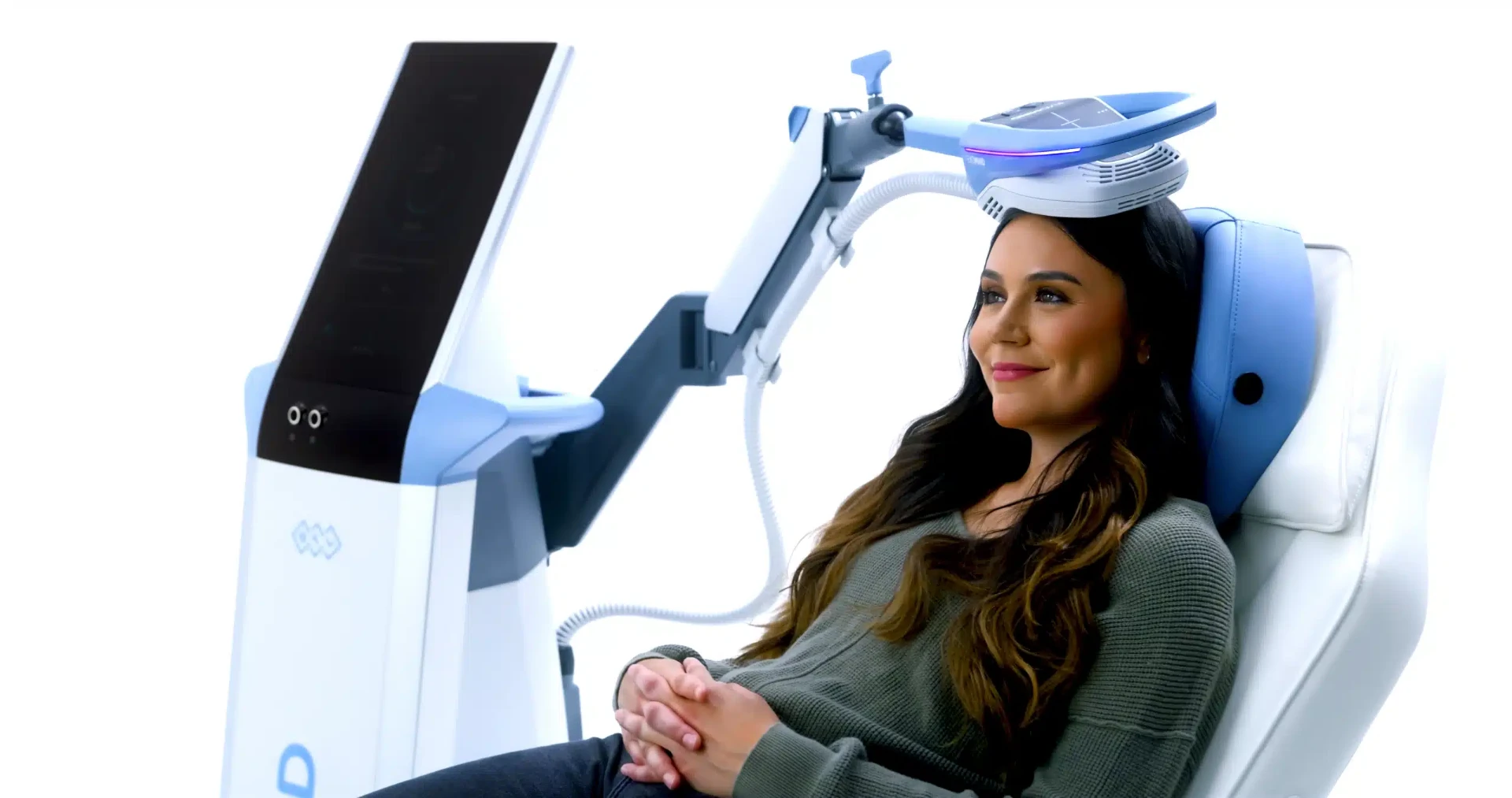
What it is
Non-invasive ExoTMS neuromodulation.
Non-invasive
No needles, no incisions, no anesthesia and no sedation. Treatment is delivered externally while you sit still.
ExoTMS neuromodulation
EXOMIND® uses ExoTMS, a form of transcranial magnetic stimulation that applies magnetic fields to targeted regions of the brain.
One part of a plan
It may be incorporated into selected patients’ broader sleep and mental-wellness plan. It is not a standalone answer to poor sleep.
Considered, not assumed
Whether it is appropriate depends on your history and screening. Some people are better served by other steps first, or instead.
Regulatory status
Cleared indication versus other applications.
- U.S. FDA-cleared indication
- As stated by the manufacturer, EXOMIND® is cleared in the United States for major depressive disorder (MDD).
- Other potential applications
- Any use outside that cleared indication — including use considered in the context of sleep quality, stress or general mental wellness — is off-label or investigational, and is discussed on that basis.
- What that means for you
- Off-label does not mean unavailable, and it does not mean proven. It means the evidence base and regulatory clearance are not the same thing, and we will say which is which during your consultation.
Sleep & mental wellness
Two questions, not one.
01
Sleep is not only mechanical
Airway anatomy explains a great deal about disrupted sleep. It does not explain everything. Stress, anxiety, mental hyperarousal, or difficulty settling the nervous system may also contribute to poor sleep or repeated nighttime awakenings.
02
Two different questions
“Is my airway obstructing?” and “Can I settle enough to sleep?” are separate questions with separate answers. Treating one does not resolve the other.
03
Where EXOMIND may sit
For some patients, stress and an overly activated nervous system may contribute to repeated awakenings or difficulty settling into restorative sleep. EXOMIND may be considered as one part of a broader evaluation and treatment approach when these factors appear relevant.
04
What stays unchanged
Obstructive sleep apnea remains a medical diagnosis, managed with physician-directed therapy. Nothing on this page changes that, and prescribed therapy should not be stopped.
Fragmentation
Fragmented nights, unrefreshing mornings.
Broken sleep has many contributors, and stress is one of them. Establishing which contributors apply to you is the point of an evaluation — and it comes before any treatment decision.
Explore Sleep Screening & Testing →Who may consider it
It may be discussed with…
- Adults already engaged in a broader sleep and airway evaluation here
- People who describe a mind that will not quiet at night, alongside other sleep concerns
- Patients whose stress load or anxiety appears to be part of their overall picture
- Patients working with a physician or mental-health clinician who is aware of this discussion
- People seeking a non-invasive option to consider as part of a larger plan
- Those interested in broader applications of EXOMIND / TMS beyond sleep
When it is not appropriate
It is not for…
- Anyone in crisis, or experiencing thoughts of self-harm — this requires immediate medical or emergency care
- Anyone seeking a replacement for prescribed psychiatric treatment or therapy
- Anyone seeking treatment for obstructive sleep apnea
- Anyone whose screening identifies a contraindication to magnetic stimulation
- Anyone expecting a guaranteed or rapid sleep outcome
Beyond sleep
The brain influences more than sleep.
While sleep and nervous-system regulation are a primary focus of how we use EXOMIND at Alpine Airway Wellness, patients may also be interested in EXOMIND for other concerns involving mood, focus, motivation, behavior, and cravings. Depending on the individual, areas of interest may include:
EXOMIND applications vary, and some uses may be considered off-label. Treatment recommendations are individualized after appropriate screening. Results vary, and treatment is not guaranteed to improve any particular symptom or condition.
EXOMIND does not replace appropriate psychiatric, psychological, primary-care, addiction-treatment, or other medical care. When symptoms require care outside our scope, collaboration with or referral to the appropriate healthcare professional may be recommended.
Evaluation
How suitability is decided.
01
Conversation
What your nights actually look like, how long it has been that way, what you have already tried, and what else is going on medically.
02
Sleep and airway context
Where relevant, screening and airway evaluation come first, so that a mechanical contributor is not overlooked.
03
Screening for suitability
A structured review of medical history and safety criteria, using our clinic-approved screening criteria and the current device operator’s manual.
04
Coordination
If you work with a physician, psychiatrist or therapist, we would rather coordinate with them than work around them.
05
A plain recommendation
Including, often, that EXOMIND is not the right next step for you — and what would be.
What a session involves
Sitting still, nothing dramatic.
You stay seated and awake
Treatment is delivered externally while you sit comfortably. No sedation is involved and you are not asleep.
Session length and schedule
Session duration, the number of sessions and their spacing are set by current manufacturer guidance and clinic protocol. We confirm these with you directly rather than publishing figures here.
What people report
Experiences during treatment vary between individuals. Any sensations, common effects and precautions are reviewed with you as part of informed consent.
Afterward
Post-treatment guidance is provided at your visit based on current manufacturer instructions.
Scope of care
What belongs to us, and what does not.
We are a dental practice
We do not diagnose or manage psychiatric conditions, and we do not manage medication. Those decisions belong with your physician or mental-health clinician.
Diagnosis stays medical
Obstructive sleep apnea, depression and anxiety disorders are medical diagnoses. Screening and education here are not a diagnosis.
Collaboration is normal
With your permission, we share findings with the clinicians already involved in your care so that the plan holds together.
Urgent concerns
If you are in crisis or thinking about harming yourself, contact emergency services or a crisis line immediately. This page is educational and is not a substitute for urgent care.
Important
Do not stop prescribed treatment.
CPAP, oral appliance therapy, psychiatric medication and psychotherapy continue unchanged unless the clinician who prescribed them says otherwise. EXOMIND is considered alongside existing care, never as a substitute for it. If you are in crisis or having thoughts of self-harm, contact emergency services or a crisis line now.
For referring clinicians
Co-managed, not parallel.
If you are a physician, sleep specialist, psychiatrist or therapist with a shared patient, we are glad to discuss where EXOMIND may or may not fit within their existing plan, share our screening findings, and defer to your direction on diagnosis and medical management.
Questions
Questions people ask about EXOMIND.
What is EXOMIND®?
Will EXOMIND fix my sleep?
Can I stop CPAP if I try EXOMIND?
Is it a replacement for therapy or medication?
Is it FDA-approved for sleep?
What does off-label mean here?
Is it invasive or painful?
How long is a session and how many do I need?
Who should not have it?
Why is a dental practice offering this?
Will you diagnose depression or anxiety?
What if I am in crisis?
How do I find out whether it applies to me?
Clinically reviewed by Dr. Brittany Johansen. This page is general education, not a diagnosis or a treatment plan.
We see patients at our Alpine, Utah office, including families from Highland, Cedar Hills, American Fork, Lehi and across Utah County.
Related care
Where to go from here.
Adult Sleep & Airway
The wider picture of how breathing, sleep and dental structure fit together for adults.
Explore Sleep & Airway Care →Sleep Screening & Testing
How at-home screening identifies patterns worth evaluating — and why it is not a diagnosis.
Explore Sleep Screening →Snoring
Why snoring happens, how it differs from sleep apnea, and how the cause is evaluated.
Learn About Snoring →Oral Appliance Therapy
Physician-directed appliance therapy for selected patients with diagnosed sleep-disordered breathing.
Explore Oral Appliance Therapy →TMJ & Jaw Pain
Clenching, facial tension and jaw pain often travel with stress and fragmented sleep.
Explore TMJ Care →Myofunctional Therapy
Retraining tongue posture, lip seal and breathing patterns as part of broader airway care.
Explore Myofunctional Therapy →Find out whether it belongs in your plan.
A consultation in Alpine, Utah looks at your sleep, your airway and your wider picture together — and tells you plainly whether EXOMIND is a reasonable next step, or whether something else should come first.