

In this collection · Sleep & Airway
Oral Appliance Therapy
A quieter way to keep your airway open at night.
For many adults with snoring or diagnosed obstructive sleep apnea, a small custom device worn during sleep is a realistic option — especially when CPAP has been difficult to live with. We provide the dental side of that care in Alpine, Utah, in coordination with your sleep physician.

The Basics
What oral appliance therapy actually is.
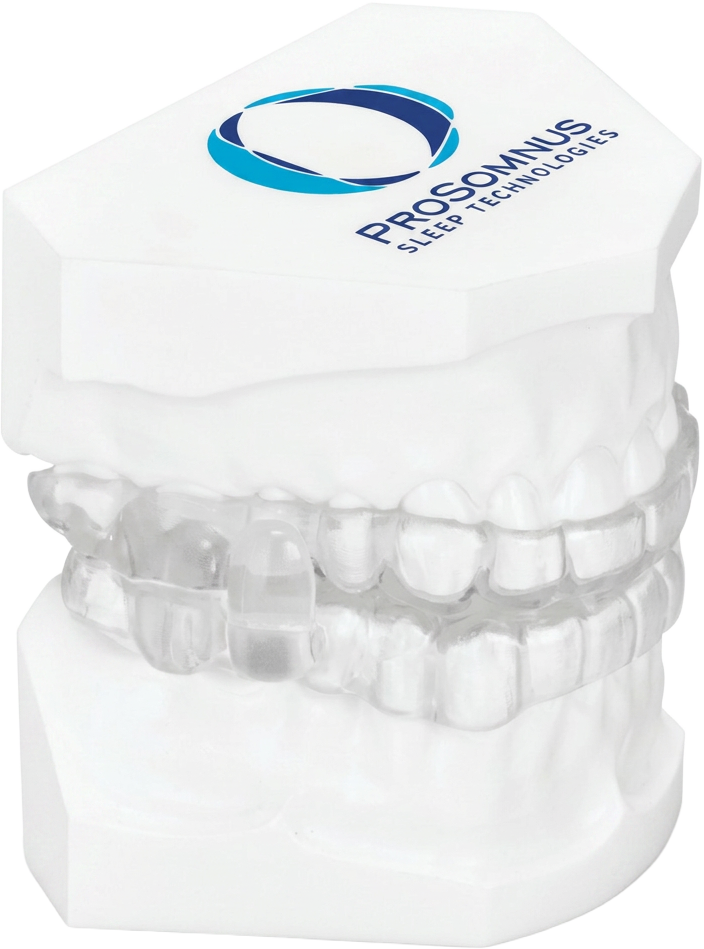
An oral appliance is a custom-made device worn only during sleep. Most designs are mandibular advancement appliances: they support the lower jaw in a slightly forward position with the goal of helping maintain space at the back of the throat, where the airway is most likely to narrow.
It is not a retainer, and it is not a night guard for grinding. It is fitted to your anatomy, adjusted in small increments and monitored over time — which is what separates it from a device bought online or moulded at home.
Oral appliance therapy is a recognized treatment option for snoring and for obstructive sleep apnea in appropriate cases. Whether it is appropriate for you is determined through evaluation and, for sleep apnea, in coordination with your physician.
Who It May Suit
People who often ask about an appliance.
These are common starting points, not criteria. Suitability is decided through evaluation and, where sleep apnea is involved, alongside your physician.
Diagnosed with mild or moderate obstructive sleep apnea
Where your physician considers an appliance an appropriate option
Unable to tolerate CPAP
Mask discomfort, pressure, dryness, or a machine that goes unused
Snoring that disrupts the household
Evaluated rather than assumed to be harmless
Frequent travel or shared sleeping arrangements
Portability and quiet matter for nightly consistency
Looking for an option to discuss with your physician
Not yet decided, and wanting a clear explanation first
Medical & Dental Roles
We treat. Your physician diagnoses.
Obstructive sleep apnea is a medical condition, diagnosed by a physician on the basis of sleep testing. We do not diagnose sleep apnea and we do not interpret sleep studies.
What we do is evaluate the dental and airway structures involved, provide and manage a custom appliance when it is an appropriate option, and share our findings with the physician directing your care. If you have not been evaluated medically, we can help arrange that first.
Changes to an existing sleep apnea treatment plan — including stopping CPAP — should be made with your physician, not on your own.
Learn About Sleep Screening →Before Any Appliance
What we look at first.
An appliance sits inside a larger picture. These four areas shape whether it is a good fit and how it should be designed.
- Airway
- Nasal breathing, throat space and the structures that influence how easily air moves at night.
- Jaw Joints & Muscles
- Comfort, range of motion and any existing joint or muscle symptoms that affect appliance design.
- Teeth & Bite
- Whether there is enough healthy tooth structure and stability to support and retain an appliance.
- Function & Habits
- Tongue posture, lip seal, grinding and daytime breathing patterns that sit alongside sleep.
A Fair Comparison
Oral appliance and CPAP, side by side.
Neither therapy is universally better. CPAP is a well-established and effective treatment; an appliance is often easier to use consistently. The best therapy is the one that is both appropriate for your diagnosis and actually worn every night.
How it works
CPAPDelivers pressurized air through a mask to hold the airway open.
ApplianceRepositions the lower jaw to help maintain space at the back of the throat.
Effectiveness
CPAPHighly effective at controlling obstruction when worn consistently through the night.
ApplianceEffectiveness varies by individual and by severity; confirmed through physician-directed follow-up testing.
Comfort & tolerance
CPAPOften not tolerated well; mask fit, pressure and dryness are common obstacles, however there are some who have successful CPAP therapy.
ApplianceUsually easier to adapt to, with an initial period of jaw, tooth or saliva changes.
Travel & practicality
CPAPRequires the machine, power and supplies.
ApplianceSmall, quiet and simple to pack.
Maintenance
CPAPOngoing cleaning, filters and replacement supplies.
ApplianceDaily cleaning and periodic professional checks.
Follow-up
CPAPUsage and pressure data reviewed by your physician.
ApplianceFit and comfort managed by us; effectiveness reassessed with your physician.
If CPAP has not worked for you, that is worth discussing rather than abandoning treatment. A separate page covers the wider set of options in more detail.
Explore CPAP AlternativesDevice Options
Appliances are not all the same.
Mandibular advancement devices
The most common design. Two custom arches connected so the lower jaw is supported in a slightly forward position, adjustable in small increments over time.
Adjustable vs. fixed designs
Adjustable devices allow gradual titration during the adaptation period. Fixed designs are simpler, and may suit certain situations. Which is appropriate depends on your anatomy and comfort.
Appliances for snoring alone
When snoring is present without a sleep apnea diagnosis, a device may still be considered — after evaluation, and with screening to be sure a medical concern is not being overlooked.
Combination approaches
Some patients use an appliance alongside other therapies or with positional strategies. Any combination involving diagnosed sleep apnea is coordinated with your physician.
The Process
What treatment looks like, step by step.
Timing varies by person. We move at the pace your comfort and your physician’s guidance allow rather than following a fixed calendar.
Consultation & evaluation
We review your symptoms, sleep history and any testing you already have, then examine your airway, jaw joints, teeth and oral function.
Coordination with your physician
If obstructive sleep apnea has not been diagnosed, or if your diagnosis needs updating, we coordinate a referral for medical evaluation and sleep testing.
Records & appliance selection
Digital scans, bite records and imaging as appropriate. We explain which appliance designs are reasonable for you and why.
Delivery & fitting
The appliance is fitted, adjusted for comfort and checked for retention. We walk through wear, cleaning and what the first nights may feel like.
Titration & adaptation
Small adjustments over a period of weeks, guided by your comfort, jaw response and reported symptoms rather than a fixed schedule.
Reassessment
Your physician determines whether follow-up testing is appropriate to confirm how the appliance is working while you wear it.
Ongoing care
Periodic checks of fit, bite, jaw comfort and appliance condition, with adjustment or replacement discussed as needed.
Adapting
The first few weeks, honestly described.
Adaptation is normal and usually gradual. Knowing what to expect makes it easier to stay with the process.
- Increased saliva or a dry mouth during the first nights
- Mild tooth pressure or tenderness in the morning
- A jaw that feels slightly different on waking, usually settling within a short time
- Occasional need to remove the appliance early while adapting
Possible longer-term effects
With extended nightly wear, some patients notice changes in bite or tooth position, or ongoing jaw muscle awareness. These are not universal, and they are one reason appliance therapy is monitored rather than delivered and forgotten.
At follow-up visits we check bite, jaw comfort, tooth position and the condition of the appliance. If something is changing, we would rather discuss it early and adjust the plan with you.
If you already have jaw joint or muscle symptoms, those are evaluated before an appliance is recommended.
Learn About TMJ & Jaw Pain →
Knowing It Is Working
Feeling better is encouraging — but it isn’t confirmation.
Improved sleep, less snoring and steadier mornings are meaningful signs, and they are worth reporting. For diagnosed obstructive sleep apnea, however, whether the appliance is controlling the condition is a medical question.
Your physician decides whether follow-up sleep testing while wearing the appliance is appropriate, and interprets the results. We supply the dental findings and adjust the appliance based on that guidance.
Living With It
Small, quiet and easy to take with you.
Practicality matters more than it sounds. A therapy that travels well tends to be used consistently.
Daily cleaning
Rinse and brush the appliance with the method we recommend for its material, and let it dry fully before storing.
Storage
Keep it in its ventilated case, away from heat and out of reach of pets — a common cause of damage.
Travel
No power, tubing or supplies. The case fits in a carry-on, which makes consistent nightly use easier away from home.
Bring it with you
Bring the appliance to dental visits so fit, wear and bite can be checked together.
Related Care
An appliance is one option among several.
Snoring
Why snoring happens, how it differs from sleep apnea, and how the cause is evaluated before anything is recommended.
Learn more about snoring and its causesCPAP Alternatives
A broader look at the options discussed when CPAP is not working, and how those conversations involve your physician.
Explore CPAP AlternativesNightLase®
A non-invasive laser protocol used with the goal of reducing snoring and supporting sleep quality. Not a substitute for sleep apnea treatment.
Explore NightLaseAdult Expansion & Functional Orthodontics
When arch width, jaw relationship and tongue space are part of the structural picture for an adult.
Explore Adult ExpansionMyofunctional Therapy
Exercise-based support for tongue posture, lip seal and breathing patterns, often used alongside other care.
Explore Myofunctional TherapyTMJ & Jaw Pain
If jaw joint or muscle symptoms are present, they are evaluated before and during appliance therapy.
Explore TMJ CareCommon Questions
Questions we hear about oral appliances.
What is oral appliance therapy?
Do I need a diagnosis before getting an oral appliance?
Is an oral appliance as good as CPAP?
Is an oral appliance comfortable to wear?
Are there side effects?
Can I use an oral appliance if I have TMJ or jaw pain?
Can I get an oral appliance over the counter?
How long does an oral appliance last?
Does insurance cover oral appliance therapy?
Will an oral appliance stop my snoring?
Clinically reviewed by Dr. Brittany Johansen. This page is general education, not a diagnosis or a treatment plan.
We see patients at our Alpine, Utah office, including families from Highland, Cedar Hills, American Fork, Lehi and across Utah County.
Related reading: adult sleep & airway care, NightLase and myofunctional therapy.
Wondering whether an appliance could work for you?
A consultation at Alpine Airway Wellness in Alpine, Utah is a straightforward place to start. We’ll review what you already know about your sleep, evaluate the dental and airway side, and be clear about what belongs with your physician.