

TMJ & Jaw Pain
Jaw pain isn’t one-size-fits-all.
Neither is treatment. Joints, muscles, bite, oral function, breathing and posture can all contribute to jaw symptoms — often in combination. We start by understanding what is actually happening, then treat conservatively based on what we find.

Common TMJ Concerns
Jaw problems don’t always feel like “jaw pain.”
- Jaw pain or soreness
- Clicking or popping
- Limited opening or locking
- Headaches
- Clenching or grinding
- Facial muscle tension
- Neck or shoulder tension
- Ear-area discomfort
Symptoms can overlap, and the same symptom can have different contributing factors. That’s why treatment starts with understanding what is happening—not simply choosing an appliance.
Looking at the Whole Picture
The TMJ doesn’t work in isolation.
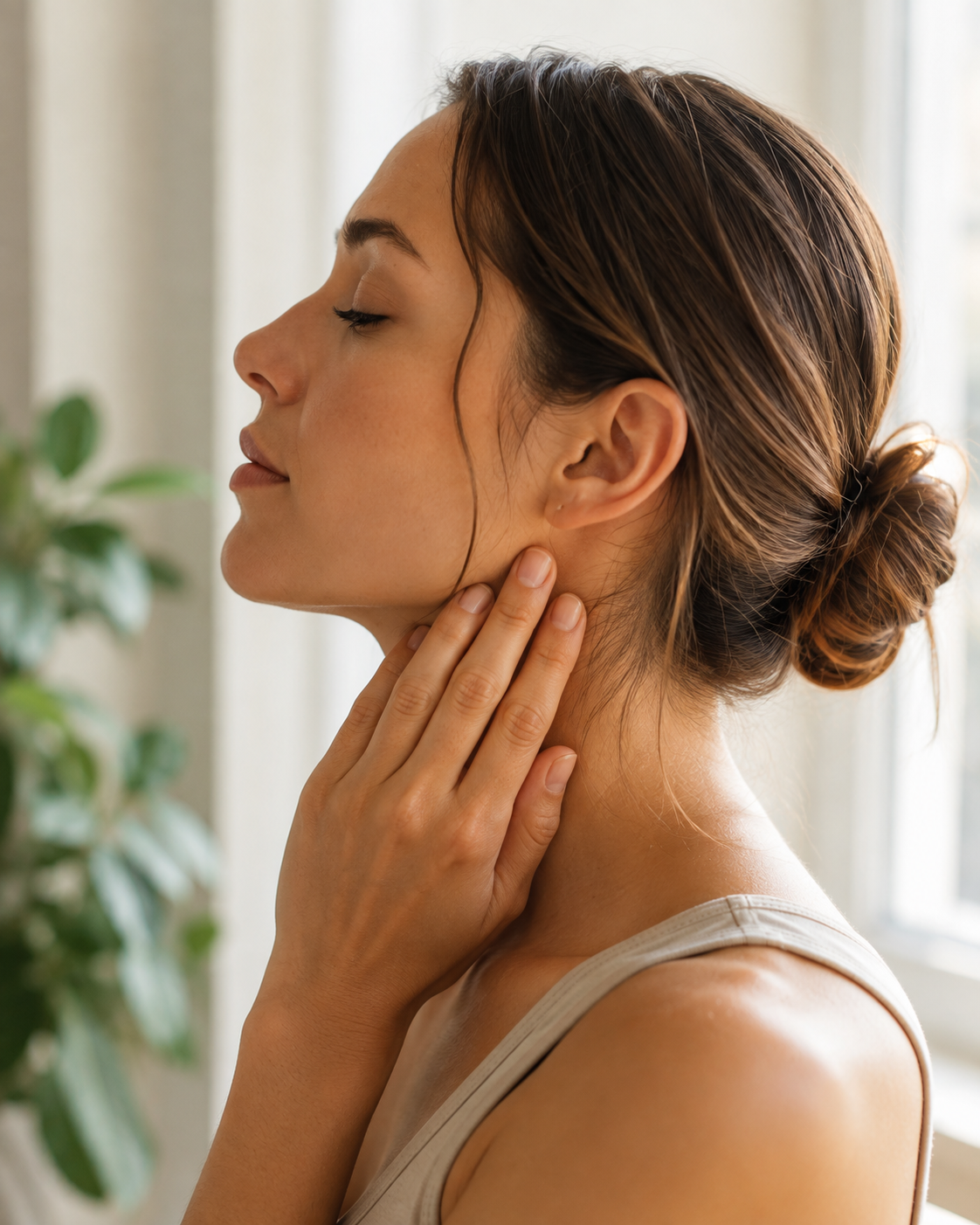
The joint sits within a system — muscles above and below it, teeth in front of it, an airway behind it and a neck supporting all of it.
- Joints
- How the temporomandibular joints move, load and track through opening and closing.
- Muscles
- The muscles of chewing and the surrounding facial muscles, and where tension is held.
- Bite & Jaw Position
- How the teeth come together and where the jaw rests and functions.
- Oral Function
- Tongue posture, swallowing patterns and everyday oral habits.
- Airway & Sleep
- Breathing and sleep patterns that can coexist with clenching and jaw symptoms.
- Head, Neck & Posture
- Neck, shoulder and postural patterns that relate to how the jaw is used.
Our goal is to understand the contributing factors before deciding how to treat them.
Our Approach
Start conservatively. Treat what we find.
Our intent is to begin with reversible, conservative care and to let the response guide the next decision. Simpler steps come first; anything more involved is considered only when the findings support it.
Because contributing factors differ from person to person, care is often an individualized combination rather than a single treatment — and it is reassessed as things change.
About Our Approach →Personalized TMJ Care
Different problems may need different tools.

TMJ Orthotics & Splints
Custom supports designed to influence jaw position, reduce strain on the joints and muscles, and protect the teeth — worn while we evaluate how symptoms respond.
Explore TMJ OrthoticsPhotobiomodulation & Laser Therapy
Adjunctive light-based therapy used with the goal of reducing discomfort, supporting recovery and addressing muscle and joint irritation.
Explore Laser & PBM TherapyEMFACE for TMJ
Synchronized radiofrequency and muscle stimulation, used as a non-invasive adjunct for selected patients with muscle tension or functional imbalance. No needles and no downtime.
Explore EMFACE for TMJCranial & Manual Therapy
Gentle hands-on techniques used to address areas of tension and support comfortable movement during care.
Explore Cranial & Manual TherapyMyofunctional Therapy
Exercise-based therapy for tongue posture, swallowing, resting posture and breathing patterns, when those factors are relevant to the findings.
Explore Myofunctional TherapyTMJ Joint Injections & PRF
Considered for selected patients as part of a broader conservative plan. PRF is prepared from components of your own blood.
Explore Joint Injections & PRFYour Treatment Plan
Not everyone needs the same treatment.
Understand
Symptoms, history and what you've already tried.
Evaluate
Joints, muscles, movement, bite and function.
Treat Conservatively
Based on your individual findings.
Reassess
Evaluate the response and adjust when appropriate.
Still Having Pain?
“I’ve already tried a nightguard.”
Persistent symptoms may deserve a closer look.
Nightguards are helpful for many people and are often a sensible first step. When symptoms persist despite one, it can be worth evaluating the joints, the muscles, jaw function and the other factors that may be contributing — rather than assuming nothing more can be done.
TMJ + Sleep
Jaw symptoms and sleep can overlap.
Clenching, disrupted sleep, breathing patterns and jaw symptoms sometimes coexist in the same person. They are not the same thing, and one does not necessarily cause the other — but when they show up together, it is reasonable to look at both rather than one in isolation.
Having trouble with snoring or sleep? Explore Sleep & Airway →Collaborative Care
Sometimes the right treatment includes the right team.
When it is appropriate, we coordinate with physicians, physical therapists, body workers, ENTs and other providers already involved in your care, so the pieces work together rather than separately.

Common Questions
Questions about TMJ & jaw pain.
What is TMJ, and what is TMD?
What causes jaw pain?
Why does my jaw click or pop?
What does it mean if my jaw locks or won't open fully?
Can TMJ problems cause headaches?
Is clenching or grinding the same thing as a TMJ problem?
I've already tried a nightguard — why am I still having symptoms?
Is TMJ treatment surgical?
How long does TMJ treatment usually take?
Can TMJ symptoms be related to sleep or breathing?
Can posture, neck or shoulder tension be involved?
Do I need braces or orthodontics to address jaw pain?
Do you work with physicians, physical therapists and other providers?
Clinically reviewed by Dr. Brittany Johansen. This page is general education, not a diagnosis or a treatment plan.
We see patients at our Alpine, Utah office, including families from Highland, Cedar Hills, American Fork, Lehi and across Utah County.
Still Looking for Answers?
Your jaw pain deserves a closer look.
If jaw pain, clicking, headaches or clenching have been part of your life for a while, a consultation at Alpine Airway Wellness in Alpine, Utah is a practical place to start — understanding the contributing factors before deciding what, if anything, to treat.