

In this collection · TMJ & Jaw Pain
TMJ & Jaw Pain
- TMJ Orthotics & Splints
- Laser & Photobiomodulation
- Joint Injections & PRF
- EMFACE for TMJ
- Cranial & Manual Therapy
Cranial & Manual Therapy
Gentle hands, steady pressure, no force.
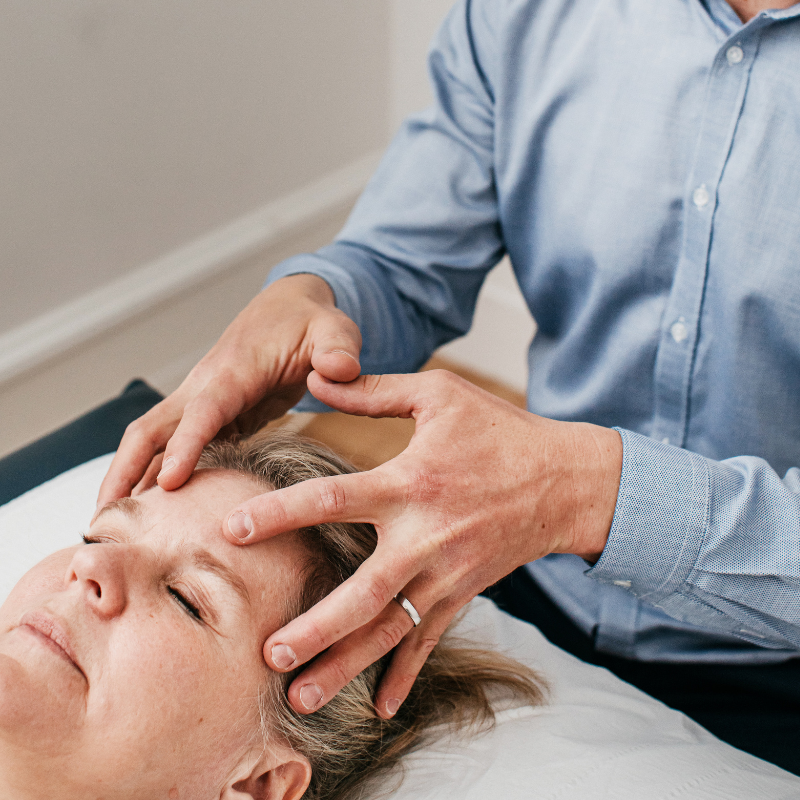
Hands-on work with the muscles and soft tissue of the jaw, head and neck — considered for selected patients to support comfort and easier movement within conservative TMJ care.
Read this first
Soft tissue and tension. Nothing more dramatic than that.
This kind of work is sometimes described in ways that overreach. We would rather be plain about what it is.
What it is
- Gentle, hands-on work with the muscles and soft tissue of the head, jaw and neck
- Light contact, held slowly, at a pressure you are comfortable with
- Aimed at tension, comfort and ease of movement
- One conservative component within a broader plan
- Always described to you before it is done
Why tension matters
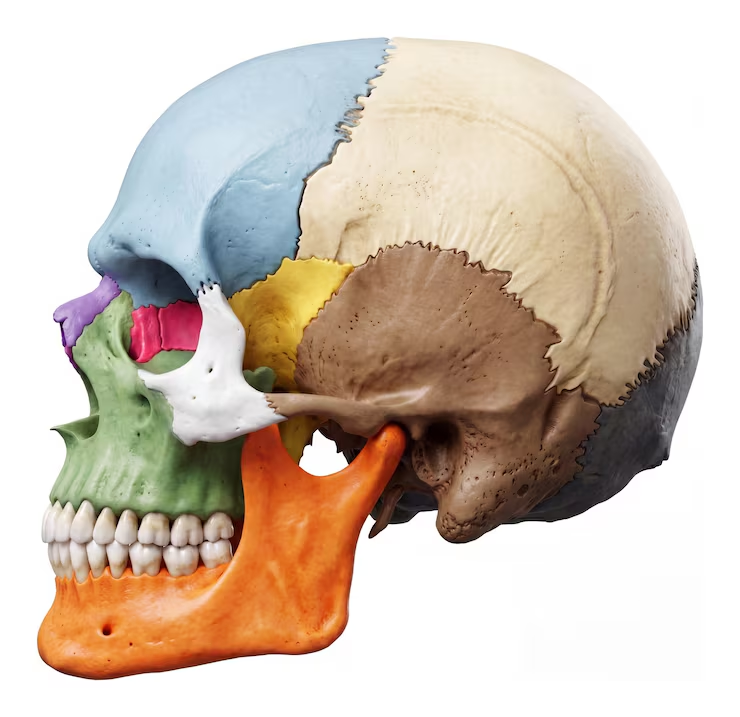
The jaw doesn’t work alone.
- The jaw does not work in isolation from the neck and head
- Sustained clenching loads muscle before it loads the joint
- Guarding and bracing patterns can persist after the original trigger fades
- Tension often shows up as soreness, stiffness or limited comfortable movement
- Posture and daily load keep feeding the same tissue
What it may help with
Comfort and movement, for selected patients.
- Jaw and facial muscle soreness
- Temple and side-of-head tension
- Neck and upper shoulder tightness that travels with jaw symptoms
- Stiffness that limits comfortable opening
- Soreness during an adjustment period with an orthotic
- Muscle guarding that keeps returning between visits
What a visit feels like
Nothing surprising should happen.
You stay clothed and comfortable
Contact is typically at the face, jaw, head and neck, and always explained in advance.
Pressure is light
This is slow, gentle work. Nothing is forced, and nothing is thrust or cracked.
You can stop at any point
Say so and we stop. Comfort during the visit is not negotiable.
Afterwards
Some people feel looser, some feel a little tender, and some notice little change. All of that is possible.
Your schedule
Recommendations are individualized.
How often hands-on work is appropriate, and for how long, is a clinical decision made for you after evaluation. We deliberately do not publish a schedule here, because the honest answer depends on the patient and on how they respond.
Combination care
One component, not the whole plan.
TMJ Orthotics & Splints
Hands-on work is sometimes discussed alongside orthotic care, particularly through an adjustment period.
Explore TMJ Orthotics & Splints →Laser & PBM Therapy
A low-level, non-cutting therapy considered for selected patients where muscle and joint comfort are involved.
Explore Laser & PBM Therapy →EMFACE for TMJ
A muscle-conditioning option discussed for selected patients in a functional rather than aesthetic context.
Explore EMFACE for TMJ →Myofunctional Therapy
Retraining resting posture and function addresses the patterns that keep loading the muscles.
Explore Myofunctional Therapy →Working with others
We are one set of hands among several.
Physical therapists
Where neck, shoulder or whole-body movement is a significant part of the picture.
Body workers and massage therapists
Ongoing soft-tissue work often complements what happens in our chair.
Chiropractors
Some patients already have an established provider, and coordination is straightforward.
Physicians and specialists
When findings suggest evaluation beyond the scope of dental care, we refer rather than guess.
The process
How care actually proceeds.
01
Evaluation
Muscles, movement, habits and history reviewed before anything hands-on is recommended.
02
A plan explained plainly
What we would do, what it may help with, and what it will not do.
03
Gentle hands-on work
Light contact at a comfortable pressure. Your schedule is individualized — see the note below.
04
Reassessment
An honest review of what changed. If it is not helping, we say so and adjust the plan.
Questions
Questions about cranial & manual therapy.
What is cranial and manual therapy?
Is there any cracking or forceful manipulation?
Does it hurt?
How many sessions will I need?
How soon might I notice a difference?
Will I be sore afterwards?
Can I have this alongside an orthotic?
Do I have to have hands-on treatment?
Is it safe?
Do you work with my physical therapist or chiropractor?
How do I find out whether it makes sense for me?
Clinically reviewed by Dr. Brittany Johansen. This page is general education, not a diagnosis or a treatment plan.
We see patients at our Alpine, Utah office, including families from Highland, Cedar Hills, American Fork, Lehi and across Utah County.
Related care
Where to go from here.
TMJ & Jaw Pain
The wider picture of conservative, non-surgical jaw care.
Explore TMJ & Jaw Pain Care →TMJ Orthotics & Splints
How a custom orthotic differs from a simple nightguard, and who may be a candidate.
Explore TMJ Orthotics →EMFACE for TMJ
Muscle conditioning discussed in a functional rather than aesthetic context.
Explore EMFACE for TMJ →Start with an evaluation, not a technique.
A consultation in Alpine, Utah gives you a clear read on what is driving your jaw symptoms — and whether gentle hands-on work belongs in your plan at all.