

Fixed expanders
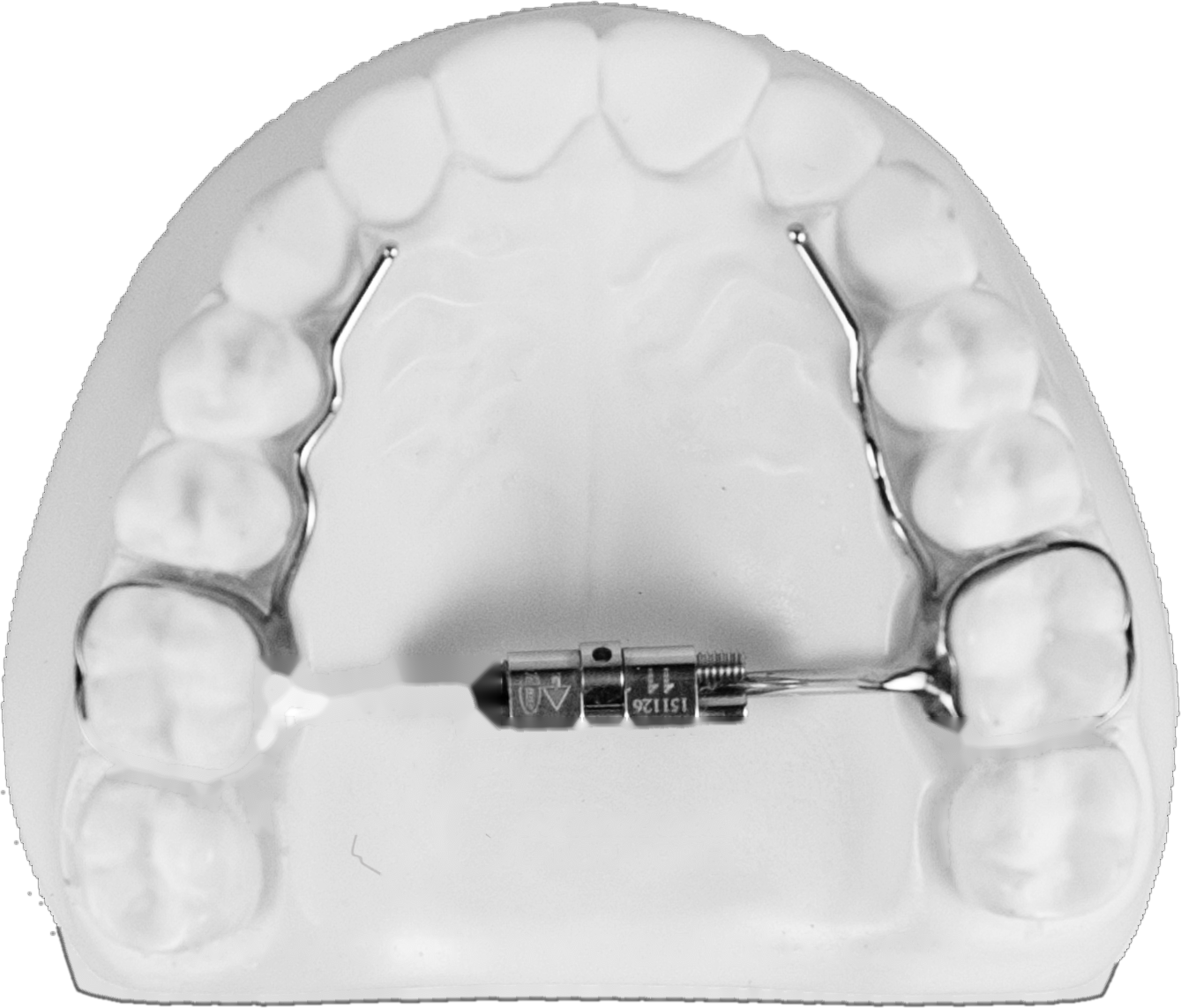
Bonded or banded appliances attached to the upper teeth and adjusted on a schedule we review with you. Design and activation are individualized.
Children's Airway & Growth
Children’s Palatal Expansion
Palatal expansion gradually widens the upper dental arch during a period of active growth. For some children it can create additional space for developing teeth and for the tongue — but it is only appropriate when the evaluation supports it.

Why Families Ask About Expansion
None of these findings mean expansion is needed. They are simply reasonable reasons to have your child evaluated.
What It Is
The upper jaw forms the roof of the mouth and the floor of the nasal passages. An expander attaches to the upper teeth and applies gentle, gradual pressure across the arch, guiding it wider over time while a child is still growing.
The purpose is developmental rather than cosmetic: creating space in the upper arch for developing teeth and for the tongue to rest comfortably. Expansion is one option among several, and it is not the right answer for every child.
Why Arch Width Matters
A narrow upper arch can limit the space available for permanent teeth, and it can limit the space available for the tongue to rest in the roof of the mouth. Tongue posture, lip seal and nasal breathing tend to be related to one another.
Because of those relationships, we evaluate arch width alongside breathing, sleep observations, oral function and growth — rather than looking at crowding in isolation.
The Evaluation
Appliance Options
Appliance selection depends on the findings, your child’s stage of development and practical considerations at home. We review the specific recommendation with you before starting.
Bonded or banded appliances attached to the upper teeth and adjusted on a schedule we review with you. Design and activation are individualized.
Appliances your child places and removes. These depend heavily on consistent wear, so they are considered case by case.
Some children benefit from appliances that address arch development or jaw relationships in other ways, alone or alongside expansion.
What to Expect
We listen to what you've noticed and review your child's history.
We assess arch width, bite, breathing, tongue function and growth stage.
We explain what we see and whether treatment, monitoring or referral is appropriate.
If expansion is recommended, we review the appliance, schedule and what to expect.
We monitor progress and reassess as growth continues.
Comfort & Daily Life
Children commonly describe a feeling of pressure, especially early in treatment and after adjustments. Speech and eating can feel different for a while as they adapt to an appliance in the mouth.
Keeping the appliance and the teeth clean matters, and we will show you and your child how. If something feels wrong, uncomfortable or simply unclear, we would rather hear from you than have you wait for the next visit.
If Expansion Isn’t the Answer
Many children who are evaluated do not need expansion. Depending on the findings, other paths may be more appropriate — including simply watching growth.
For many children, the most appropriate next step is simply watching growth and reassessing later.
Children's Airway & GrowthSupporting tongue posture, lip seal, nasal breathing and swallowing patterns, on its own or alongside other care.
Learn About Myofunctional TherapyEvaluating restricted oral tissues, and treating them when appropriate as part of a coordinated plan.
Learn About Tongue-TiesGuiding developing tooth position and bite while considering growth and function.
Explore Early & Functional OrthodonticsCollaborative Care
Breathing, sleep and growth often involve several disciplines. When appropriate, we coordinate with your child’s dentist, orthodontist, pediatrician, ENT, sleep physician, myofunctional therapist and other healthcare providers so care stays connected.
Our Collaborative Approach →Common Questions
Clinically reviewed by Dr. Brittany Johansen. This page is general education, not a diagnosis or a treatment plan.
We see patients at our Alpine, Utah office, including families from Highland, Cedar Hills, American Fork, Lehi and across Utah County.
Serving Alpine & Utah County
If you’ve noticed crowding, a narrow palate, mouth breathing or restless sleep, a consultation at our Alpine, Utah office can help you understand what you’re seeing and whether expansion, another option, or continued monitoring makes sense.